

I will begin with the three core values of our trade union movement. Then I will briefly take you through the process, the reforms, the achievements, and the challenges that remain. And finally, I will leave you with one question: What can we take away from our struggle?
Our Unshakeable Pillars
Let me begin with three principles that have always guided the trade union movement:
Equality. Social Justice. Solidarity.
First, we fight for equality—because every worker deserves equal rights, dignity and opportunity.
Second, we are driven by social justice—because economic development has little meaning if working people are left behind.
And third, and most importantly, there is solidarity—the force that binds individual workers into a collective movement.
But what do these principles mean in practice?
They mean protecting our rights and interests; collectively negotiating for better wages, reasonable working hours and secure benefits; defending job security against sudden loss, unsafe workplaces and unfair discipline; and advocating for laws and public policies that protect working people.
That has been the foundation of our struggle.
The Core Question: How Do We Secure Our Future?
Let me put a simple question to you:
What really makes a worker secure about the future?
What happens when you retire with nothing?
For many years in Nepal, a pension was largely something associated with civil-service employment. Gratuity was available mainly to regular, permanent workers in the private sector. Medical treatment and compensation for workplace accidents were also limited, particularly for permanent employees. Education and housing support remained largely privileges available to workers in a few large organisations. And survivor benefits for families were extremely limited. Even provident-fund protection was often restricted to regular employees.
So, our fundamental demand was very simple:
These should not be privileges for a few. They should be rights for all workers.
That became one of the central objectives of labour reform in Nepal.
"Labour rights are never permanently secured.
They must be continuously defended, strengthened and renewed."
The Tug of War: Flexibility versus Security
But achieving this required us to confront a deeper question:
Who has the power to determine the conditions under which wealth is created and distributed?
Labour reform is, ultimately, a contest over power and the distribution of the wealth created by workers. And the balance of power depends greatly on the mode of production—the economic system within which we work.
One of the central debates in Nepal was therefore: Flexibility versus Social Security.
Employers wanted greater flexibility in employment—including greater freedom to hire, deploy and, where necessary, terminate workers.
Trade unions, on the other hand, insisted that greater flexibility must be accompanied by greater social security.
Our approach was not to oppose a dynamic economy. Our message was:
We are not against flexibility. We are against flexibility without security.
The formula we advocated was straightforward:
The greater the labour-market flexibility, the greater the social-protection must be.
And this was reflected in our proposed contribution-sharing approach:
Worker : Employer : Government = 1 : 2.5 : 2.5
The principle was clear: if workers are asked to bear greater employment risks, society must provide stronger protection against those risks.
Seven Pillars of the Reform Journey
In pursuing reform, we identified seven critical areas.
First—Social Security:
The bedrock of workers’ future security.
Second—Labour Flexibility:
Making flexibility work for workers as well as employers.
Third—Exit Policy:
Ensuring fair and just treatment when employment comes to an end.
Fourth—Gender:
Guaranteeing equality and freedom from discrimination.
Fifth—Labour Administration:
Building a system that works fairly and effectively.
Sixth—Trade Union Rights and Collective Bargaining:
Protecting the fundamental right to organise. Rights-based issues should be prevailed automatically and subject to labour-administration oversight, while interest-based issues should be settled through collective bargaining.
Seventh—Informal Labour:
Bringing millions of informal workers—the largely voiceless section of our workforce—within the framework of labour protection.
These seven issues became the broad pillars around which the reform process developed.
"Decent employment + Strong collective bargaining + Universal social security = Comprehensive worker protection."
How Did the Unions Build Power?
The trade unions were not powerless.
Our strength came from building the movement from the bottom up.
From the enterprise to the federation.
From the federation to the confederation—GEFONT.
From the confederation to like-minded confederations (such as the ITUC-Nepal Affiliates Council).
And from individual families of workers to the entire trade-union movement through the Joint Trade Union Coordination Centre (JTUCC).
We also learned that workers could not negotiate with employers individually. So we engaged employers collectively—through employer’s organisations such as Federation of Nepalis Chamber of Commerce & Industries (FNCCI), with Confederation of Nepalis Industries (CNI) joining the process later.
We engaged the Government.
And we reached beyond the traditional industrial-relations arena—to Parliament, international financial institutions, the ILO, UN agencies, the media, academia and the wider public.
This broad alliance-building became an important source of strength.
The Process Mattered
The reform was not achieved overnight. We built a robust process.
We convened National Labour Conferences to identify common ground and establish mandates around the seven critical issues. We strengthened the JTUCC as a common platform and collective voice for workers.
We generated international solidarity through Global Union Federations and trade-union support organisations. We engaged MPs, Parliament officials, political parties, media and opinion-makers. We sought expert assistance from the ILO, international financial institutions and UN agencies.
But perhaps most importantly, we worked to shape the public narrative.
We campaigned. We explained why reform mattered. We built public understanding. And we sought public support. Because labour reform is not won only around the negotiating table.
It is also won in the court of public opinion.
"When workers stand together,
we are not only stronger—we are unstoppable."
The Outcome: Two Landmark Acts
This long process eventually produced what I would call the two pillars of Nepal’s modern labour regime.
The first was the Labour Act, 2017, which introduced a more flexible and diversified employment system, breaking with the traditional approach.
The second was the Contribution-based Social Security Act, 2017, which established a new institutional framework for social protection.
Together, these two laws represented a major shift.
But we should not romanticise the achievement. The laws are not perfect. They were the product of the balance of power at a particular historical moment. In other words, they were a compromise.
And, like every compromise, they contain strengths as well as weaknesses.
8. Five Major Risks in the Labour Act
From a trade-union perspective, we must remain vigilant about at least five major risks.
Precarisation of Employment: Regular employment could increasingly be replaced by time-bound, task-bound, casual, part-time and trainee arrangements.
Weakening of Job Security: Lay-off and retrenchment provisions could be misused, particularly where workers and unions have weak bargaining power.
Erosion or Ambiguity of Benefits: Questions remain around wages, leave, provident funds, gratuity and social-security contributions—especially for non-regular workers.
Expansion of Outsourcing: Labour-supplier arrangements can encourage outsourcing and indirect employment, fragmenting the employment relationship.
The Need for Stronger Trade-Union Vigilance: Some provisions leave considerable space for employer discretion or depend on rules, collective agreements and responsible union conduct.
Therefore: Strong, independent and accountable trade unions remain essential.
The central lesson is this:
Flexibility must never become a pathway to precarious employment.
The strategic sequence for unions is therefore:
Employment security → Lay-off/retrenchment → Social security → Outsourcing → Collective bargaining → Union vigilance.
Seven Major Themes of Contribution-Based Social Security
If the Labour Act introduced flexibility, the Social Security Act sought to provide security against the risks associated with employment and life.
There are seven particularly important features.
Broadening Coverage: The system moves beyond conventional formal employment and potentially covers formal workers, self-employed people, informal-sector workers, government employees and specified non-regular workers, as well as dependent family members.
Building a Contributory System: The system is primarily financed through worker and employer contributions, supplemented by other prescribed sources.
Comprehensive Life-Cycle Protection: The Act provides for eight categories of protection: health and sickness, maternity, accident, disability, old age, dependants, unemployment, and other schemes determined by the Fund (absence is unemployment benefit).
Making Employers Accountable: Registration and contribution are not simply administrative matters. The system provides enforcement mechanisms against non-compliance.
Tripartite Governance: Government, employers and trade unions are represented within the Social Security Fund, creating an institutional basis for tripartite governance.
A State Guarantee: An especially important principle is the Government’s responsibility to ensure continuity of prescribed social-security protection if the Fund becomes insufficient
Protecting Statutory Rights: The Act and its Rules cannot simply be overridden through collective bargaining agreements.
The architecture can therefore be summarised very simply:
Coverage → Registration → Contribution → Fund → Benefits → Enforcement → State Guarantee.
Seven Issues That Still Require Trade-Union Attention
The existence of a law does not automatically guarantee protection.
From a trade-union perspective, we must continue to focus on seven issues:
Universal coverage—especially bringing informal, self-employed, casual and other non-standard workers into the system.
Adequate contribution rates—so that changing rates do not undermine the adequacy of benefits.
Employer compliance—ensuring registration and contributions actually happen.
Portability and continuity—so that workers do not lose protection when they change employers or employment status.
Tripartite governance—ensuring that union and employer participation is meaningful, not merely nominal.
State responsibility—turning the statutory state guarantee into a reliable fiscal commitment.
The relationship with collective bargaining—clearly distinguishing statutory social-security rights from additional benefits negotiated by workers and employers.
The Two Acts: Two Complementary Pillars
If I were to explain the relationship between the two laws in one sentence, I would say: The Labour Act provides flexibility in employment; the Social Security Act provides protection against the risks created by that flexibility.
The logic is:
Labour Act → Employment flexibility
↓
Risk → Insecurity, unemployment, irregular income
↓
Social Security Act → Income and social protection
↓
Result → Greater security despite employment flexibility
But there is an important limitation.
Social security cannot substitute for job security.
It cannot justify excessive temporary employment. Unemployment benefits cannot replace the right to stable employment. Social-security coverage cannot legitimise abusive outsourcing. And social protection cannot fully compensate for inadequate wages or weakened collective bargaining power.
Therefore, these two laws must operate as complementary—not substitute—pillars.
The Labour Act protects workers within the employment relationship. The Contribution-based Social Security Act protects workers against the social and economic risks that arise during and beyond employment.
So, from a trade-union perspective, our ultimate formula should be:
Decent employment + Strong collective bargaining + Universal social security = Comprehensive worker protection.
The Long Road of Change
Before we conclude, we should remember our history.
This is a story of nearly seven decades of resistance, resilience and reform.
Nepal passed through different modes of production, reflected in different generations of labour legislation.
It took 12 years, from 1947, to achieve the first labour law.
It took another 33 years, from 1959, to reach the Labour Act and Trade Union Act.
And it took 25 years, from 1992, to reach the Labour Act and Social Security Act.
So, every major victory came slowly. Every reform required patience. Every achievement required sacrifice. Each victory was hard-won.
And that history teaches us an important lesson:
Labour rights are never permanently secured. They must be continuously defended, strengthened and renewed.
So, What Now?
This brings me to the final question: What kind of movement do we need today to achieve results?
The answer depends, once again, on the mode of production and on the relative strength of the actors in today’s world of work.
But one thing is clear: We cannot simply wait. We have to adapt.
The modes of production have changed. Technology has changed. The world of work has changed. But our principles have not changed.
Equality. Social Justice. Solidarity.
These remain our unshakeable pillars.
So, we must: Build our strength. Strengthen our solidarity. Engage our allies.
And make our collective voice so strong that it cannot be ignored.
We must become more organised, more strategic and more united than ever. We must use every tool available to us. And we must continue to build public understanding and support.
Finally
Our struggle is a marathon, not a sprint.
But every step forward matters.
Every reform we secure matters. Every worker we organise matters. Every right we defend matters. And every generation that we bring into the movement strengthens the future of working people.
So let us leave here with renewed purpose. Let us stand together—shoulder to shoulder—and continue this historic journey. Because the world of work may change. Technology may change. The mode of production may change. But our commitment to equality, social justice and solidarity must never change.
And when workers stand together,
we are not only stronger—we are unstoppable.
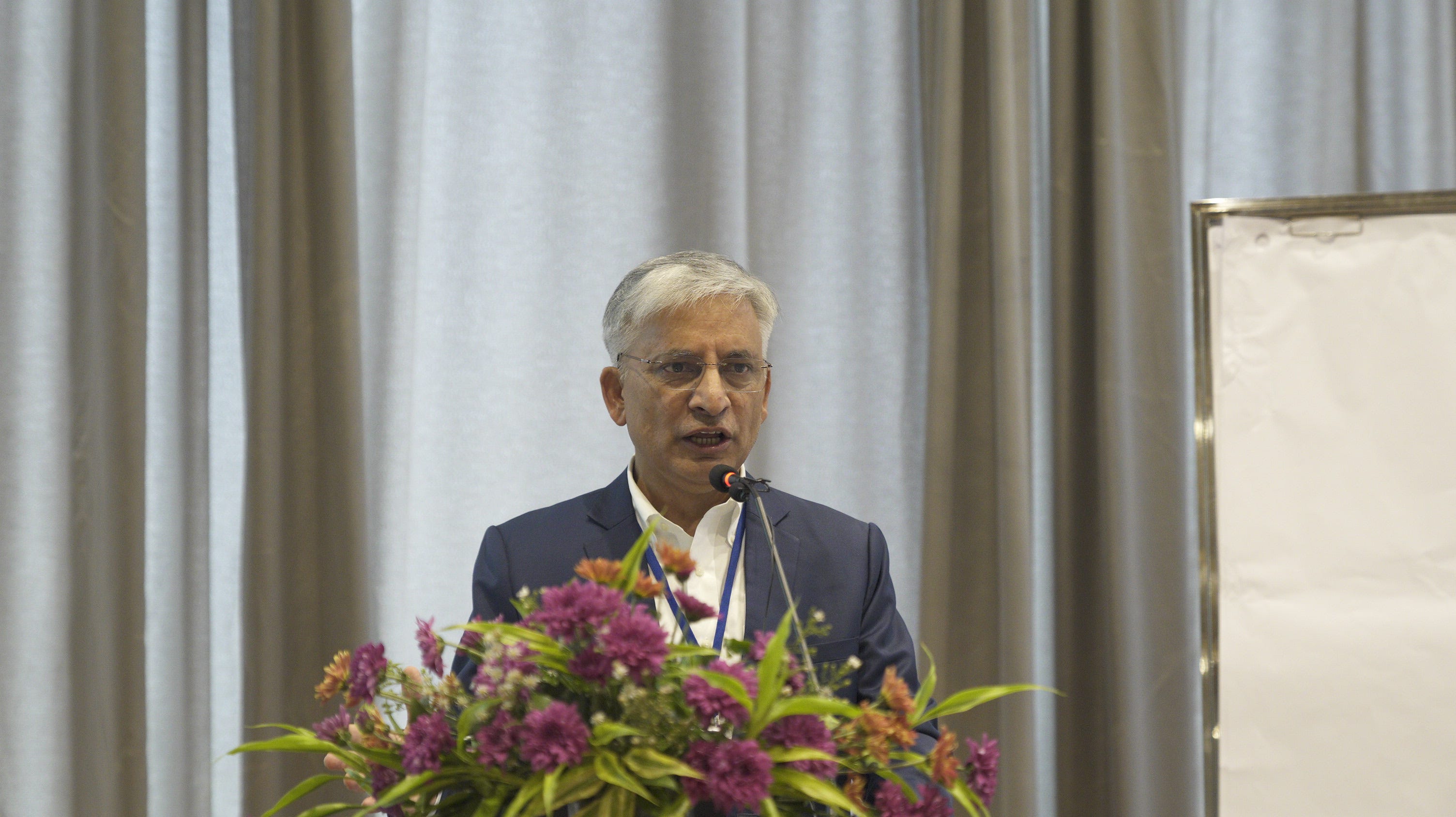
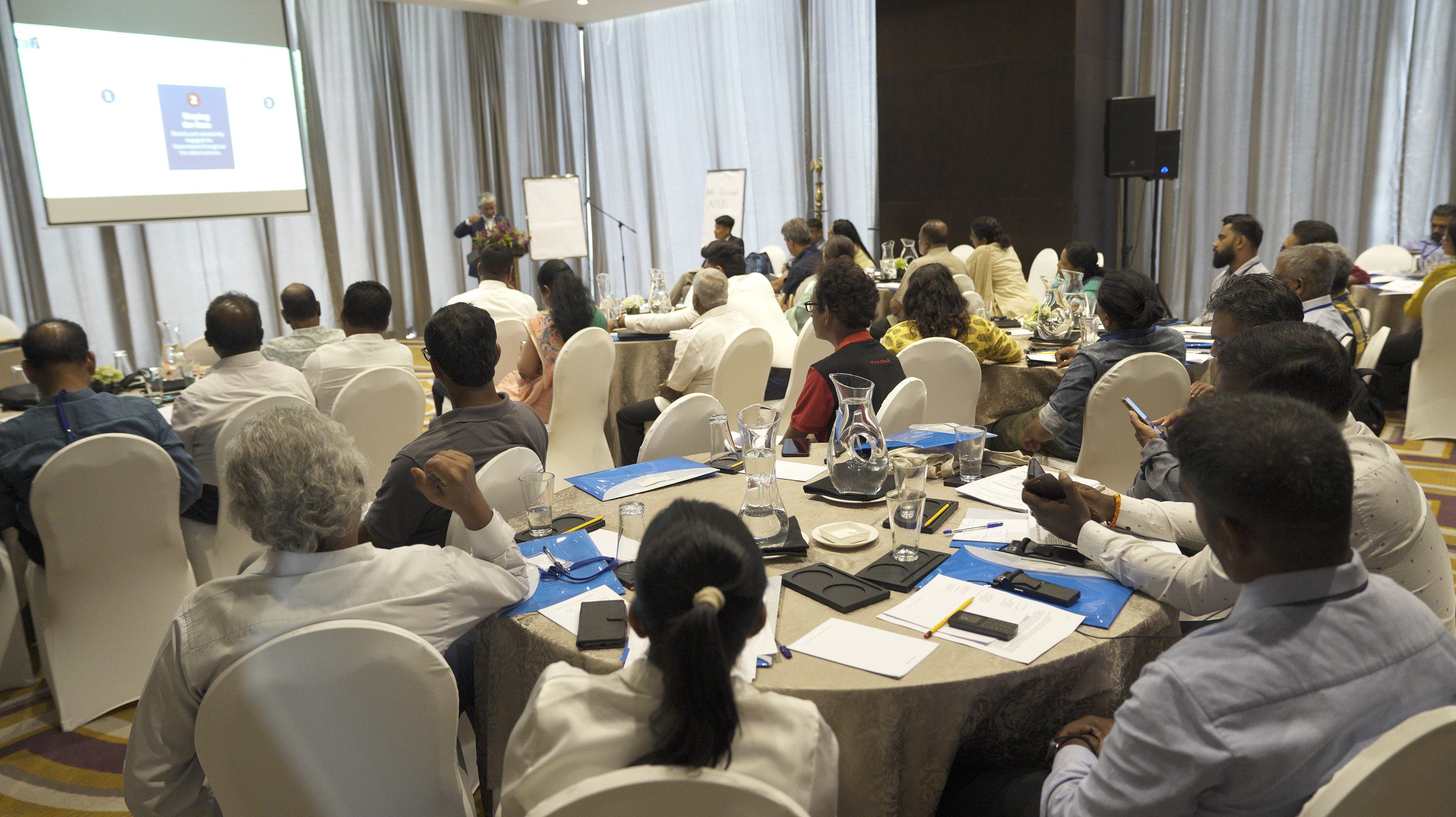
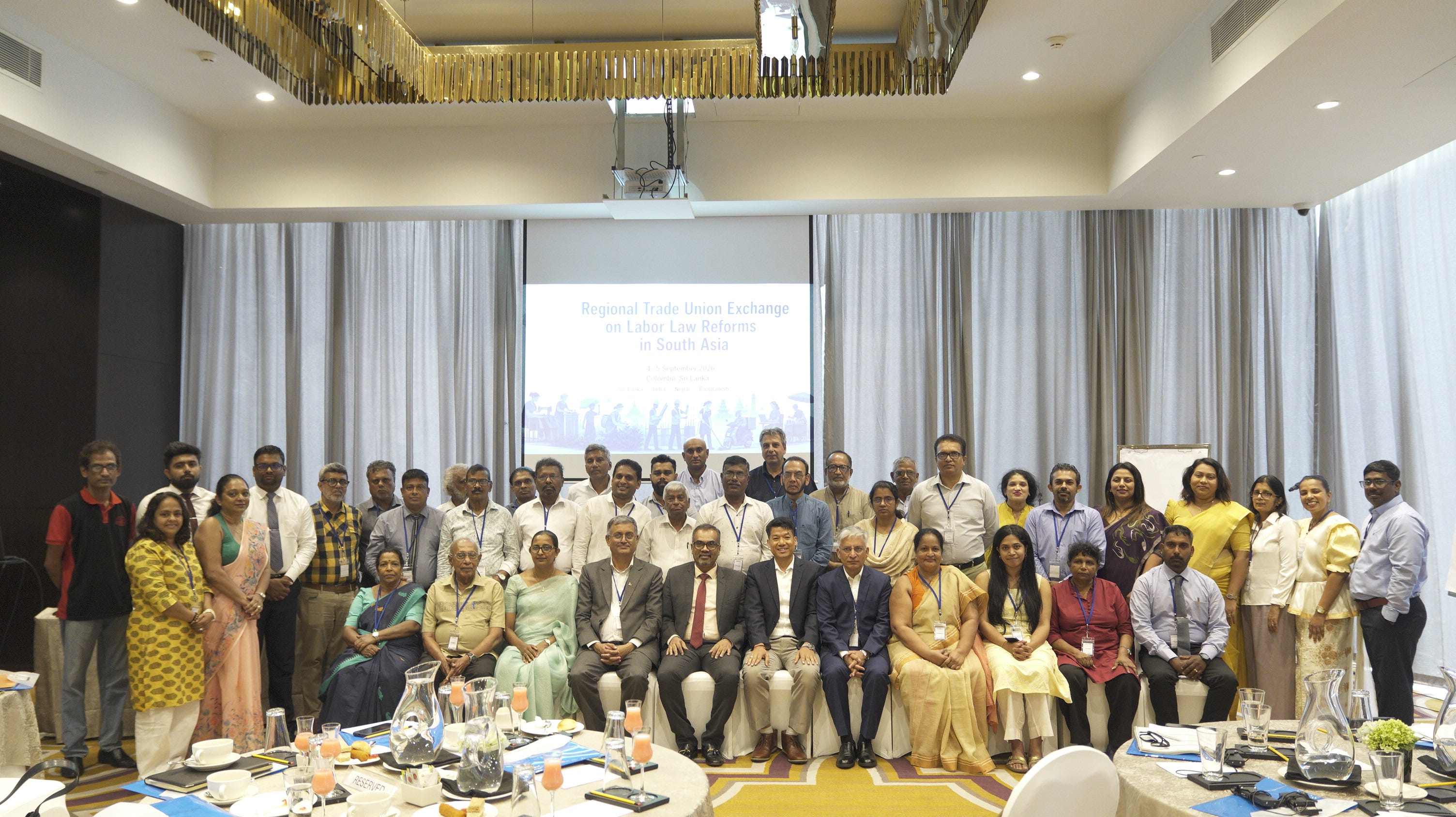
[04 September 2026, Hotel Pullman, Colombo, Sri Lanka
Note presented at Regional Trade Union Exchange on Labour Law Reforms in South Asia]